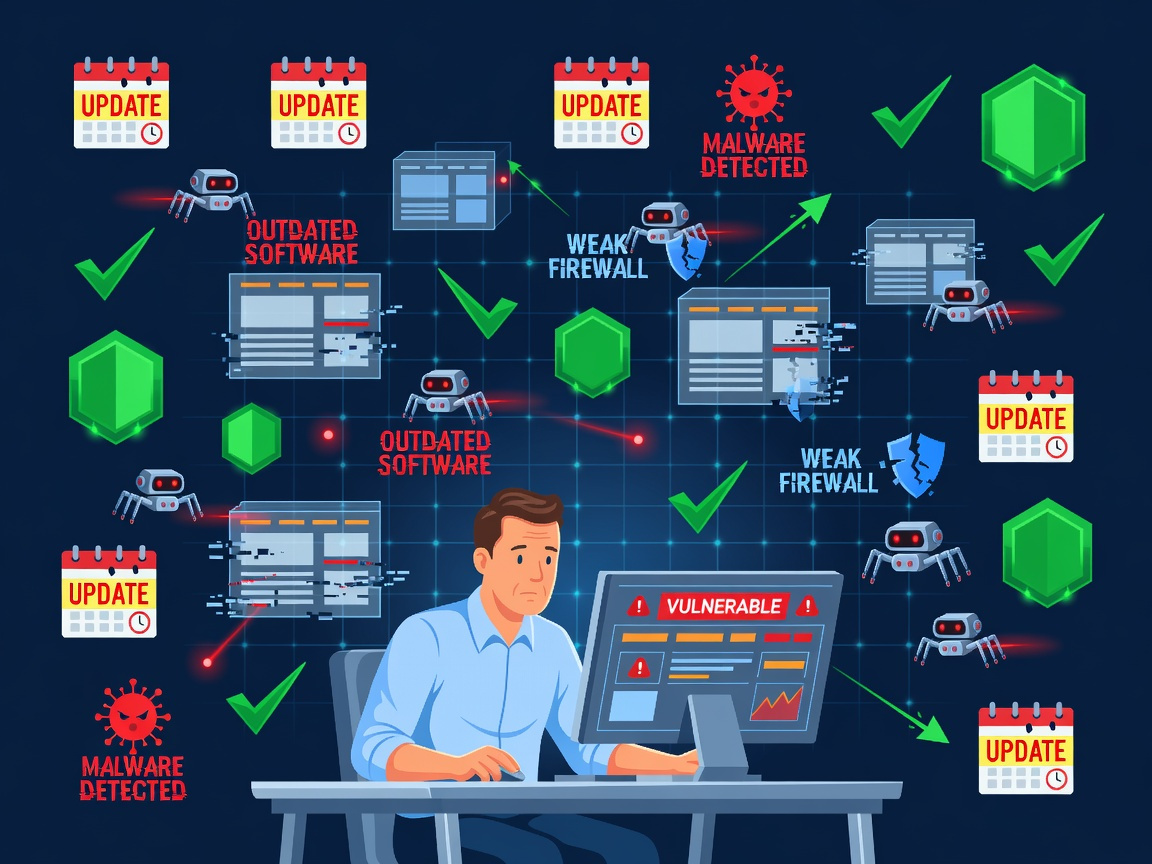
Quick answer: AI asset management is the practice of treating every automation, script, prompt, and data pipeline in a business as an inventoried, owned, and cost-tracked corporate asset. CFOs demand it because ungoverned AI tools create untracked API spend, duplicate subscriptions, key-person risk, and compliance exposure, all of which leak margin

Request Your Free AI Cost and Asset Audit
AI Spend Without Asset Management Is Margin Leakage
Most companies adopted AI tools the same way they adopted SaaS a decade ago, one credit card subscription at a time. The result is a sprawl of disconnected tools, duplicate capabilities, untracked API spend, and automations nobody fully understands. For a CFO, that sprawl is not innovation. It is unmanaged operating expense with unknown risk attached.
The companies getting real margin benefit from AI treat their automations, scripts, prompts, and data pipelines as assets. Assets get inventoried, owned, monitored, and optimized. That discipline is the difference between AI that compounds and AI that quietly bleeds money.
What Complete AI Asset Management Means
An Inventory of Every System
The starting point is a complete register of what exists. Every scraper, every enrichment script, every content pipeline, every API integration, with a named owner, a documented purpose, and a known cost to run. In our own operation, the lead generation stack alone includes a batch scraper, a deduplication module, a Places API enrichment script, and a dialer push script, all tied together by a daily orchestration pipeline. Each piece is documented and tracked in a master log, so we know exactly what ran, when, and what it produced. That is what auditable automation looks like.
Cost Visibility Down to the API Call
API-based systems have variable costs that scale with usage, and unmonitored usage is where budgets quietly explode. Proper asset management means rate limits are handled in code with retry and backoff logic, batch sizes are tuned deliberately, and spend per workflow is a known number. When a CFO asks what it costs to generate a qualified lead or produce a published article, the answer should be a figure, not a shrug.
Continuity and Key-Person Risk
An automation that only one employee understands is a liability sitting on your operations. Documented pipelines with handoff references mean the system survives staff changes. We build handoff documentation as a standard deliverable for exactly this reason. The asset belongs to the business, not to whoever happened to build it. The same discipline gap shows up in web operations, where cheap website management quietly skips the work that protects you.
The Margin Mechanics
Why does this rise to CFO-level attention rather than staying an IT concern? Because each piece of it lands directly on the income statement. Eliminating duplicate tooling cuts subscription expense immediately. Tuning API usage converts a volatile variable cost into a predictable one. Documented, owned systems reduce the cost of turnover and the cost of errors. And reliable automation expands gross margin structurally, because delivery cost stops tracking revenue growth.
There is also a defensive case. Ungoverned automations touching customer data, outreach lists, or published content carry compliance exposure. We build compliance rules directly into production pipelines for regulated client accounts, so restricted claims and prohibited content are blocked at the system level rather than caught by a reviewer who might miss one. CFOs in regulated industries understand exactly why that matters.
The AI Asset Management Question to Ask Your Team This Quarter
Security posture belongs in the same asset register; our website security hardening guide covers what governed infrastructure looks like on the web side.
Ask for a complete list of every AI tool, script, and automation running in your business, who owns each one, and what each one costs per month. If that list takes more than a day to produce, you do not have AI asset management. You have AI sprawl, and it is costing you margin you cannot currently see. We build and manage these systems as governed assets from day one. If you want a real inventory and a real cost picture, that is a conversation worth having.
Get a Real Inventory of Your AI Spend. Book a Call
Frequently Asked Questions
What is AI asset management?
AI asset management is the practice of inventorying, assigning ownership to, and cost-tracking every automation, script, prompt, and data pipeline in a business, the same way a company manages physical or software assets.
How does unmanaged AI spend hurt profit margins?
Through duplicate tool subscriptions, untracked API usage that scales with volume, errors from undocumented automations, and key-person risk when only one employee understands a system. Each of these lands directly on the income statement.
What should a CFO ask for to audit AI usage in their company?
A complete register of every AI tool, script, and automation in use, with a named owner and monthly cost for each. If that list takes more than a day to produce, the company has AI sprawl rather than AI asset management.