Why Your Website Gets Traffic but No Leads
If your website gets traffic but no leads, the problem usually isn’t traffic.
That’s the first thing most businesses get wrong.
They look at analytics, see visitors coming in, and assume the issue must be SEO, ads, or not enough content. So they publish more blogs, tweak keywords, or spend more on traffic.
And nothing changes.
Because traffic does not create leads.
Ownership does.
The False Assumption That Keeps Businesses Stuck
Most businesses assume this logic is true:
More traffic → more leads → more sales
That relationship used to hold.
Today, it rarely does.
In 2026, websites sit in a much more complex environment:
- higher trust expectations
- faster performance standards
- accessibility and compliance requirements
- AI-driven search and answer engines
- fragmented user journeys across devices
Traffic alone no longer solves any of that.
The Most Common Reasons Traffic Doesn’t Turn Into Leads
When we audit sites with this problem, the causes are almost never obvious.
1. No one owns conversions
Forms exist, but no one tests them.
CTAs exist, but no one evaluates them.
Pages exist, but no one asks if they actually persuade.
When responsibility is split between a developer, a marketer, and “whoever last touched it,” conversions fall through the cracks.
2. The site looks fine, but feels uncertain
Design is not the same as trust.
Small things compound:
- vague messaging
- unclear positioning
- outdated copy
- generic stock visuals
- inconsistent tone
Visitors don’t bounce because the site is “bad.”
They bounce because it doesn’t feel decisive.
3. Tracking is broken or incomplete
Many businesses think they aren’t getting leads — when in reality they just aren’t seeing them.
Forms fail silently.
Events aren’t tracked.
Emails don’t fire.
Spam filters intercept messages.
Traffic increases.
Leads appear to stay flat.
No one is watching the full system.
4. Performance decay over time
Websites don’t suddenly become slow.
They accumulate weight.
Plugins, scripts, images, embeds, and integrations stack over months and years. Each one slightly reduces speed and clarity.
Users feel it immediately.
Analytics rarely make it obvious.
5. The website isn’t aligned with how people actually decide
Many sites are built around:
- features
- services
- explanations
But buyers arrive with:
- doubt
- risk awareness
- comparison anxiety
- trust questions
If the site doesn’t guide that decision process, traffic won’t convert.
Why This Problem Is Worse in 2026
This gap between traffic and leads is growing, not shrinking.
Here’s why:
AI search reduces second chances
When AI systems summarize businesses for users, unclear sites don’t get surfaced.
If your website doesn’t communicate value cleanly, AI answers route around it.
Expectations are higher
Users expect:
- fast loading
- clean mobile UX
- accessibility compliance
- clarity in seconds
Anything less creates hesitation.
Trust signals matter more than ever
Reviews, consistency, authority, and messaging alignment now matter more than clever tactics.
Traffic without trust is noise.
Why “More SEO” Usually Makes This Worse
This is the part most agencies won’t tell you.
When a website already gets traffic but no leads, adding more SEO often amplifies the problem.
You bring in more visitors…
to a system that isn’t converting.
That increases frustration, not results.
The Real Fix Isn’t a Tactic — It’s Ownership
Websites that convert consistently have one thing in common:
Someone owns the outcome.
Not:
- hosting
- plugins
- rankings
- reports
But outcomes.
That means one accountable party is responsible for:
- performance
- messaging
- conversions
- tracking
- trust signals
- ongoing improvement
Without ownership, traffic will always leak.
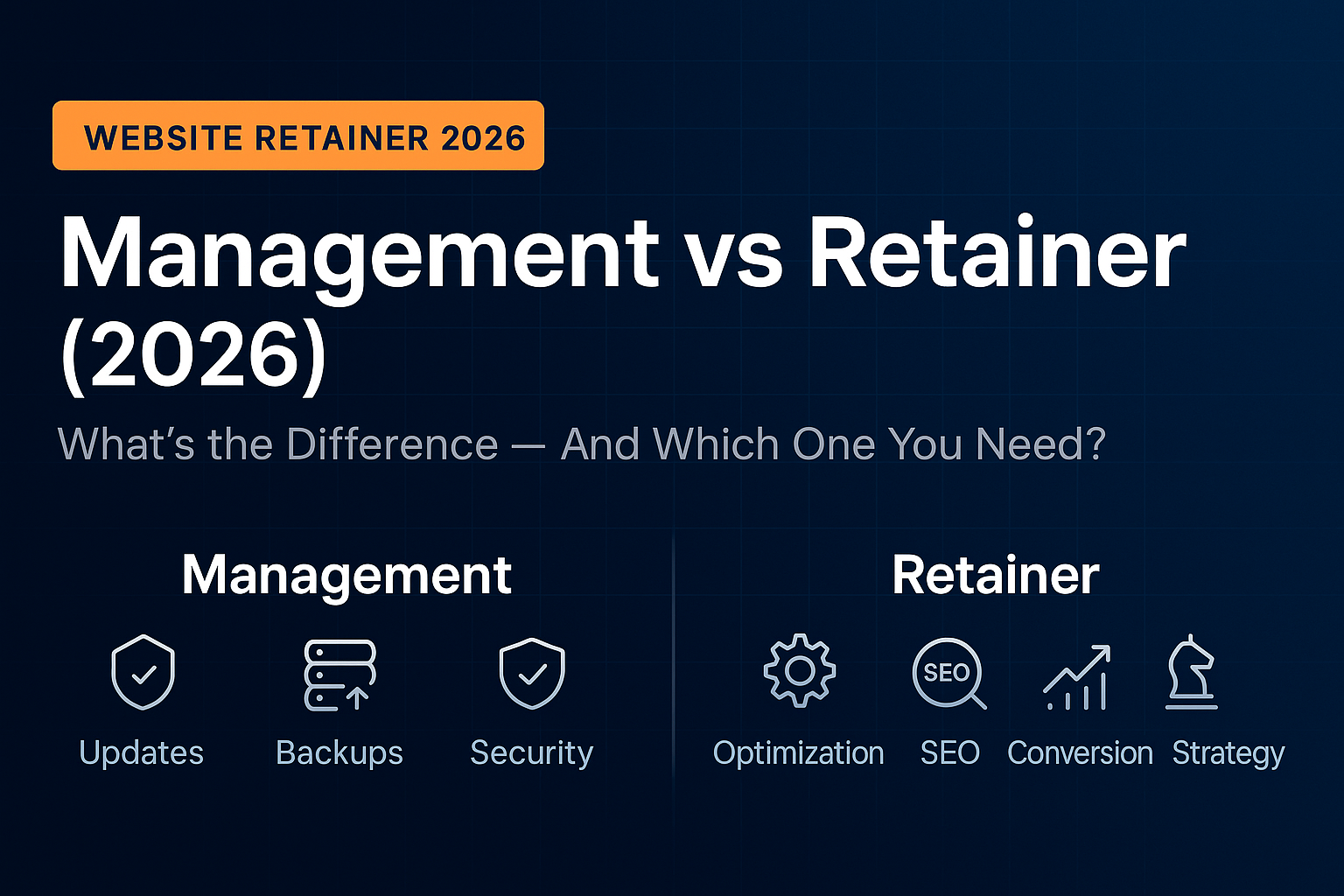
Website Management vs “Having a Website”
This is where the difference shows up.
Having a website means:
- it exists
- it loads
- it doesn’t crash
Managing a website means:
- it improves
- it adapts
- it stays trustworthy
- it converts better over time
One attracts visitors.
The other turns them into opportunities.
The Question to Ask Before Chasing More Traffic
Before spending another dollar on SEO or ads, ask this:
Who is responsible for making our website convert today?
If the answer is unclear, traffic isn’t the problem.
Final Thought
Websites don’t fail because they lack visitors.
They fail because no one owns the system that turns attention into action.
Traffic is attention.
Ownership is leverage.